
Who this guide is for
- Intermediate and advanced learners who regularly know the vocabulary but still miss the line
- Test-ready learners who struggle with interviews, meetings, social media, or film dialogue
- Readers who translate word by word but cannot paraphrase the result
- Anyone who wants to distinguish a grammar problem from a phrase or subtext problem
Do not blame vocabulary yet: comprehension has at least five layers
A sentence depends on at least five layers. Syntax tells you who did what. Word sense selects one meaning of a familiar word. Formulaic language lets several words function as a unit. Discourse resolves pronouns, ellipsis, and contrast. Pragmatics tells you which social action the speaker is performing.
A dictionary solves only part of this. You may know hold, breath, kick, can, and road but still miss: I wouldn’t hold my breath. They kicked the can down the road again. Both groups function as larger units, and the second sentence explains the pessimism in the first.
| Layer | Typical signal | Diagnostic question |
|---|---|---|
| Syntax | Embedded clauses or long modifiers | What are the core subject, verb, and complement? |
| Word sense | A common word feels wrong | Has the domain or collocation selected another sense? |
| Phrase | Simple words become opaque together | Do they regularly function as one unit? |
| Discourse | this / it / that / they is unclear | What does the previous sentence supply? |
| Pragmatics | Literal meaning conflicts with reactions | Is this refusal, mitigation, irony, or testing? |
Five recurring breakdowns
Polysemy: address can mean deal with a problem. Collocation: English speakers commonly raise a concern. Idiom: move the goalposts means changing the criteria unfairly. Discourse reference: the that in That might be a stretch points backward. Pragmatics: That’s one way to look at it often marks polite distance rather than agreement.
Breakdowns stack. A phrase can be formulaic and simultaneously soften conflict. A translation of “what it means” may still omit why the speaker chose it here.
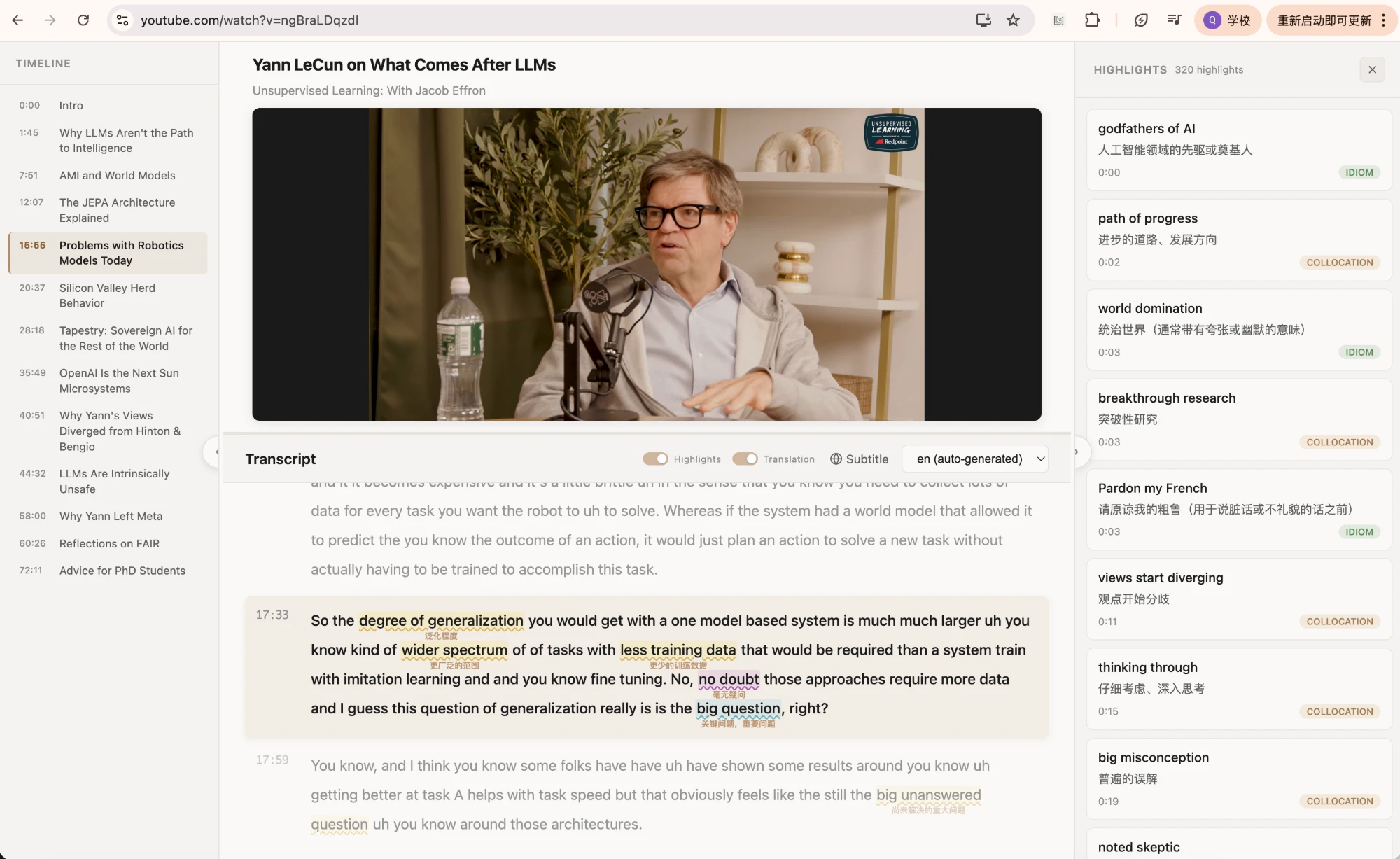
Case study: expectation, delay, and attitude
A colleague asks whether a long-running issue will be resolved this week. The response is: “I wouldn’t hold my breath. The board kicked the can down the road again.” The first phrase means do not expect it soon. The second means the board postponed dealing with the issue.
The relationship matters. Sentence one gives the low expectation; sentence two gives the reason; again implies a repeated pattern. The speaker may sound resigned or critical. A full paraphrase is: “I doubt it will be resolved this week because the board postponed the decision yet again.”
Use this diagnostic order when a sentence feels impossible
A fixed sequence is faster than random lookup and helps you see which type of knowledge is missing.
- Extract the syntactic spineTemporarily remove parentheticals and long modifiers. Keep the subject, central verb, object, and complement. If that frame is unclear, solve structure first.
- Test familiar words for a different senseOrdinary words often extend in business, technical, or social contexts. Substitute a candidate meaning and test the sentence logic.
- Group adjacent words into candidate chunksLook for verb–noun, adjective–noun, prepositional, paired, and idiomatic units instead of assigning every word an independent meaning.
- Read one sentence backward and forwardResolve pronouns, omission, and markers such as again, still, though, and actually.
- Name the social actionAsk whether the line refuses, mitigates, complains, corrects, jokes, gives face, or tests the listener.
Do not outsource every breakdown to full-sentence translation
Full translation is excellent for information access. For learning, it can conceal the exact gap. The result tells you what was said without showing which English phrase and tone performed the work.
First write a direct paraphrase, then use translation to check it. For That’s one way to look at it, a useful paraphrase may be I understand your interpretation, but I do not fully agree. That step identifies social function. Contextual explanations, including LeMingle’s, should help resolve this occurrence rather than replace your reading of the surrounding scene.
Build an expression radar, not another list of difficult words
The richest candidates are often passages that feel strangely difficult despite familiar vocabulary. They expose gaps in collocation, discourse, or pragmatics more directly than an obvious unknown noun.
Do not save only a translation. Keep the complete expression, original line, direct contextual meaning, communicative function, and one personal variation. A later encounter can then refine conditions of use rather than merely confirm familiarity.
| Field | Example |
|---|---|
| Expression | I wouldn’t hold my breath |
| Contextual meaning | I do not expect this to happen soon |
| Function | Lowering expectations, often sceptically |
| Original scene | Colleagues discussing a board decision |
| Personal variation | I wouldn’t hold my breath for a reply today. |
Sometimes the missing piece is world knowledge
Not every failure is linguistic. Industry concepts, relationships, historical events, and cultural references can break comprehension too. If you can paraphrase the syntax and phrases but still cannot see why the conclusion follows, investigate the topic rather than collecting more vocabulary.
That distinction matters: solve language gaps with grammar, phrases, and pragmatics; solve knowledge gaps with background research. Mixing them creates the false feeling that your vocabulary is never large enough.
From understanding to use: one more transfer is required
Understanding an idiom does not license it everywhere. Observe register, typical subjects, and evaluation before producing it. Kick the can down the road is critical and may not suit a neutral report; defer the decision is more neutral.
Mature expression knowledge includes both “what does this mean?” and “who would say it, to whom, under what conditions?” That is the line between decoding words and participating naturally.
Frequently asked questions
If I know every word but not the sentence, is my grammar weak?
Possibly, but not necessarily. Extract the core syntax first. If it is clear, investigate word sense, multiword expressions, discourse reference, and speaker intent. Intermediate learners often have a chunk or pragmatics gap rather than a basic grammar gap.
Why not just read the whole-sentence translation?
That is sensible for information access. For learning, it may hide which phrase or tone you missed. Paraphrase first, then use a translation to verify.
How should I record an idiom or collocation?
Keep the complete expression, original sentence, contextual meaning, communicative function, and one variation of your own—not a detached one-line translation.
Sources and verification
- Formulaic Sequences: Acquisition, Processing and UseResearch on multiword units in language processing and L2 acquisition.
- Learning L2 formulaic sequences from meaning-focused activitiesA review of contextual learning, salience, and recurrence.
- Formulaic focus-on-form episodes in adult EFL interactionsResearch on attention to collocations, lexical bundles, and idioms in adult EFL interaction.