Go the extra mile: meaning and how to thank someone
To go the extra mile is to make a little more effort than is usually required, in order to help someone or to do a job well. It is not a literal extra mile, and it does not mean you must accept unlimited overtime.

A situation that makes the meaning clearer
Support staff not only finish a setup, but also prepare a clear how-to guide. The extra step really helps the other person, so a thank-you with this phrase fits. The praise is for useful care, not for self-sacrifice.
Examples in context
The dialogues and examples below were written for teaching.
She went the extra mile by preparing a clear setup guide.
She made an extra effort by preparing a clear setup guide.
Thanks for going the extra mile to help us settle in.
Thank you for the extra care you took to help us settle in.
Form and tone to remember
The past form of go is went; thanks for going uses the -ing form. By can introduce the specific extra action.
The tone is appreciative and fairly informal. Extra effort should not become a boundless obligation. The point is that the help was useful, not that more sacrifice is always better.
How can you reply?
You're welcome. I'm glad the guide was useful.
You’re welcome. I’m glad the guide helped.
A short reply is enough. You can also say which further help is still in scope.
Close expressions with different jobs
Wear many hats describes holding several roles. Go the extra mile stresses useful effort beyond the usual requirement; it does not have to mean a new role.
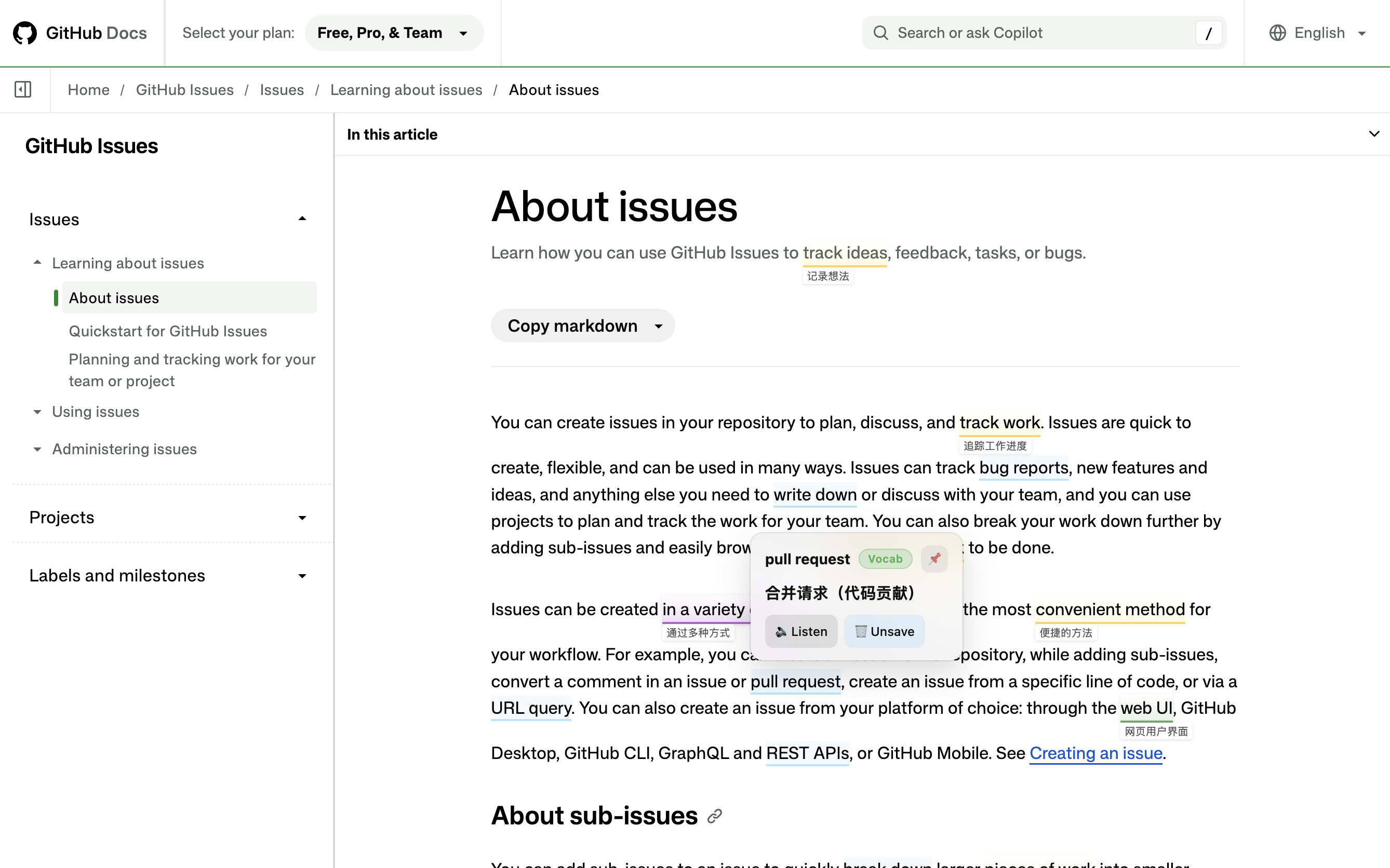
Save useful expressions while you read
After looking up go the extra mile, you may run into another familiar-looking phrase on the next page. LeMingle finds and highlights expressions worth learning as you read, and helps you check the meaning in context. You can save useful ones; when they appear again on another page, they are flagged. Notice who is speaking and in what situation, so you keep more than a translation.
See a real screenshot of saving expressions