On the same page: meaning and how to check alignment
To be on the same page is to have a shared understanding or a shared view of something. In a meeting, “Are we on the same page?” usually checks whether everyone understands the matter in the same way. It is not a question about which page of a document you are looking at.

A situation that makes the meaning clearer
Before a group presentation, you think Friday’s delivery is an outline, while a teammate has prepared a finished product. What you need to check is not who worked harder, but whether you understand the deliverable in the same way. Name the deadline or the scope so you know what you are aligning on.
Examples in context
The dialogues and examples below were written for teaching.
Before we start, let's make sure we're on the same page about the deadline.
Before we begin, let’s check that we all understand the deadline in the same way.
I thought we were on the same page, but your draft has a different scope.
I thought we had a shared understanding, but your draft covers a different scope.
Form and tone to remember
A common pattern is be on the same page about something. You can also say get everyone on the same page, meaning bring people to a shared understanding. Keep the article: not on same page.
The phrase does not mean that everyone agrees on every detail. Name a specific topic, then ask someone to restate the key decision. A bare yes can still leave a misunderstanding in place.
How can you reply?
Yes. We're delivering a draft on Friday, not the final version.
Yes. What we are delivering on Friday is a draft, not the final version.
Say what you understand, rather than only “got it.” If you heard it differently, you can say I understood it differently.
Close expressions with different jobs
On the same wavelength is more about two people thinking in a similar way. On the same page is better for checking a shared understanding of a particular issue. Touch base is a short contact; it does not guarantee that you have reached a shared view.
Save useful expressions while you read
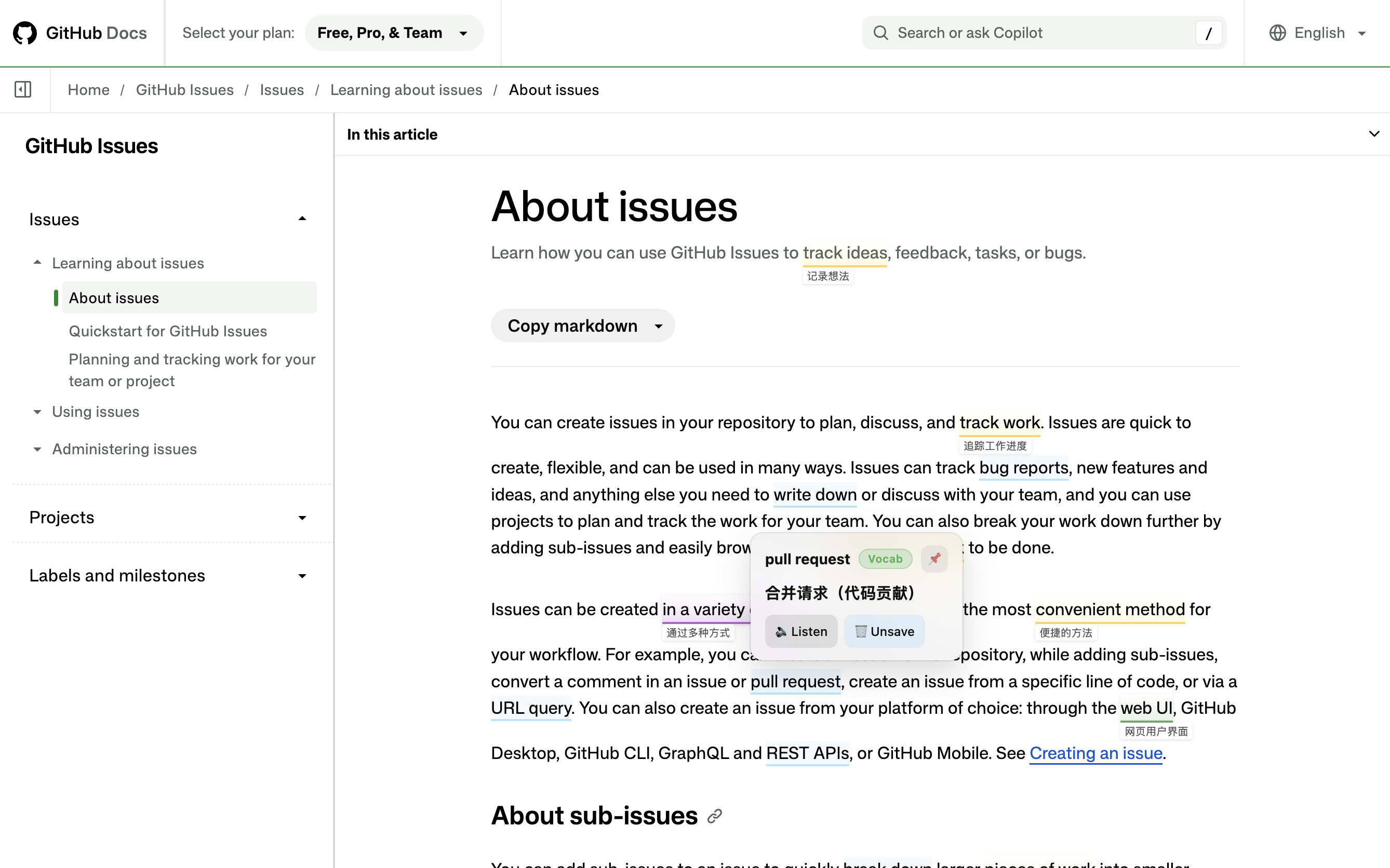
After looking up on the same page, you may run into another familiar-looking phrase on the next page. LeMingle finds and highlights expressions worth learning as you read, and helps you check the meaning in context. You can save useful ones; when they appear again on another page, they are flagged. Notice who is speaking and in what situation, so you keep more than a translation.
See a real screenshot of saving expressions