Small talk: meaning and how to keep it natural
Small talk is light, informal conversation, often about everyday topics. It does not mean speaking quietly, and it does not mean the content is worthless. It can help people feel a little more comfortable with one another.

A situation that makes the meaning clearer
Waiting for an interview, standing in a coffee line, or opening an event often leaves a short gap. A question that follows from the shared situation usually sounds more natural than a memorized list of topics.
Examples in context
The dialogues and examples below were written for teaching.
We made small talk while waiting for the interview.
We made light conversation while waiting for the interview.
I'm not great at small talk, but I enjoy asking people about their interests.
I am not especially good at light, informal chat, but I like asking people about their interests.
Form and tone to remember
The usual collocation is make small talk. It is typically uncountable: you do not say a small talk for one exchange.
Everyday topics still depend on the relationship and the setting. Pay, appearance, or someone’s private life may be a poor opening. Silence is not automatically a failure. The “small” refers to the informal, low-stakes nature of the chat, not to volume or to a lack of value.
How can you reply?
How has your week been so far?
You ask how their week has been so far — an easy, open question.
Leave room for an easy answer, then follow a detail if one appears.
Close expressions with different jobs
Break the ice is specifically about easing first-meeting stiffness. Small talk is a form of conversation; people who already know each other use it too.
Save useful expressions while you read
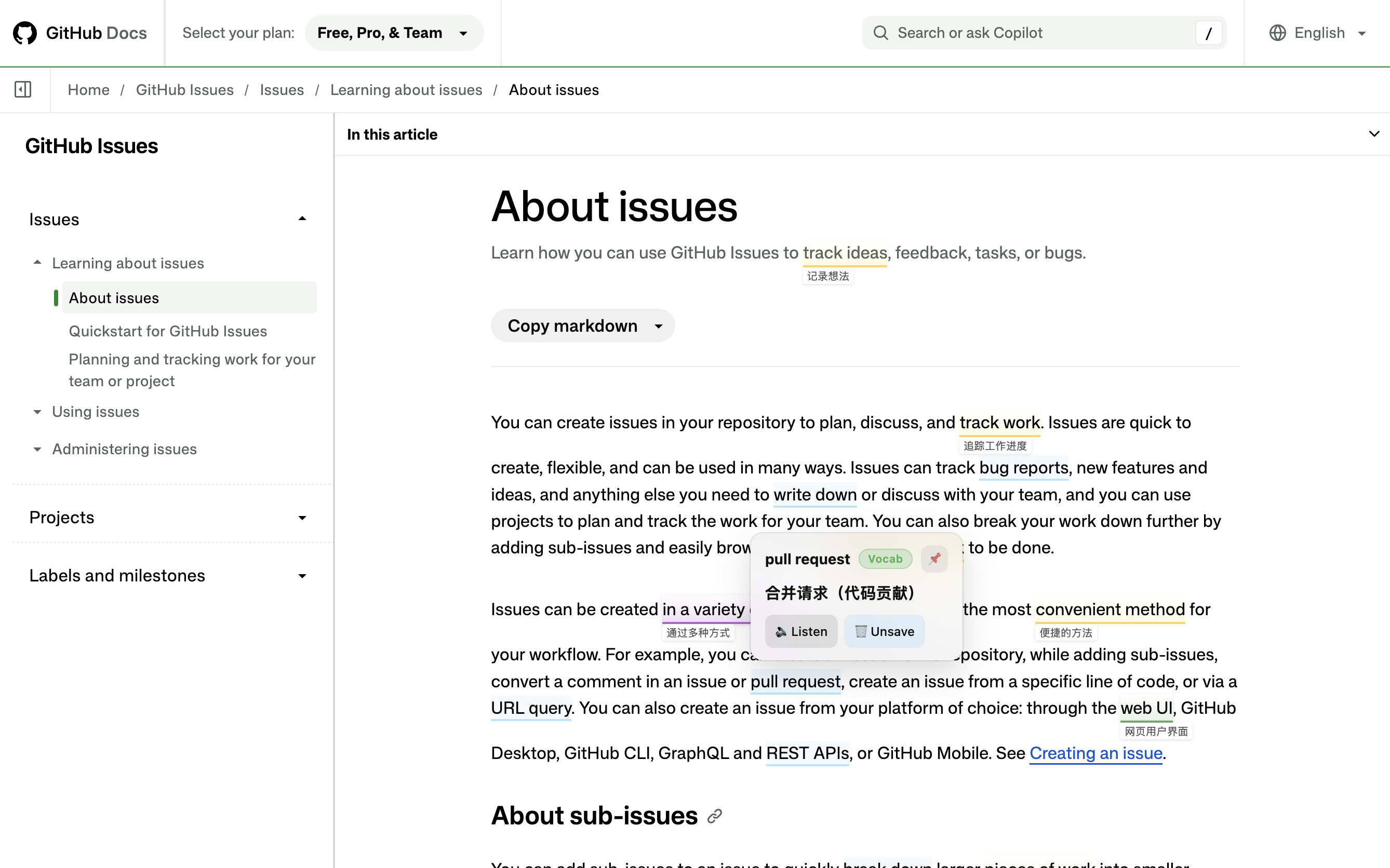
After looking up small talk, you may run into another familiar-looking phrase on the next page. LeMingle finds and highlights expressions worth learning as you read, and helps you check the meaning in context. You can save useful ones; when they appear again on another page, they are flagged. Notice who is speaking and in what situation, so you keep more than a translation.
See a real screenshot of saving expressions