Catch up: meaning in social and work contexts
Catch up can mean talking with someone you have not seen for a while and hearing their news, or it can mean getting back up to date — catching up on work, lectures, or missed tasks. Look at the object and the topic. It is not always “running to overtake someone.”

A situation that makes the meaning clearer
When an old friend suggests coffee, they usually want to hear how you have been. When a classmate says they need to catch up on lectures, they mean they have missed class and need to cover the material. The two situations are quite different.
Examples in context
The dialogues and examples below were written for teaching.
Let's catch up over coffee this weekend.
Let’s meet for coffee this weekend and hear each other’s news.
I need to catch up on the lectures I missed.
I need to cover the lectures I missed.
Form and tone to remember
Catch up with someone often means meeting to share news, though it can also mean literally catching someone up. Catch up on work usually means completing what has fallen behind.
Let’s catch up is sometimes only a friendly suggestion, not a firm plan. If you really want to meet, follow through with a time. The social sense is informal; the work sense appears in everyday study and office talk as well.
How can you reply?
I'd love to. Saturday afternoon works for me.
I’d like that. Saturday afternoon is possible for me.
Offer a time that actually works, so the social catch-up becomes a real plan.
Close expressions with different jobs
Get up to speed is mainly about reaching the information you need. Catch up can cover that kind of catching up on work, and it can also be a purely social reunion.
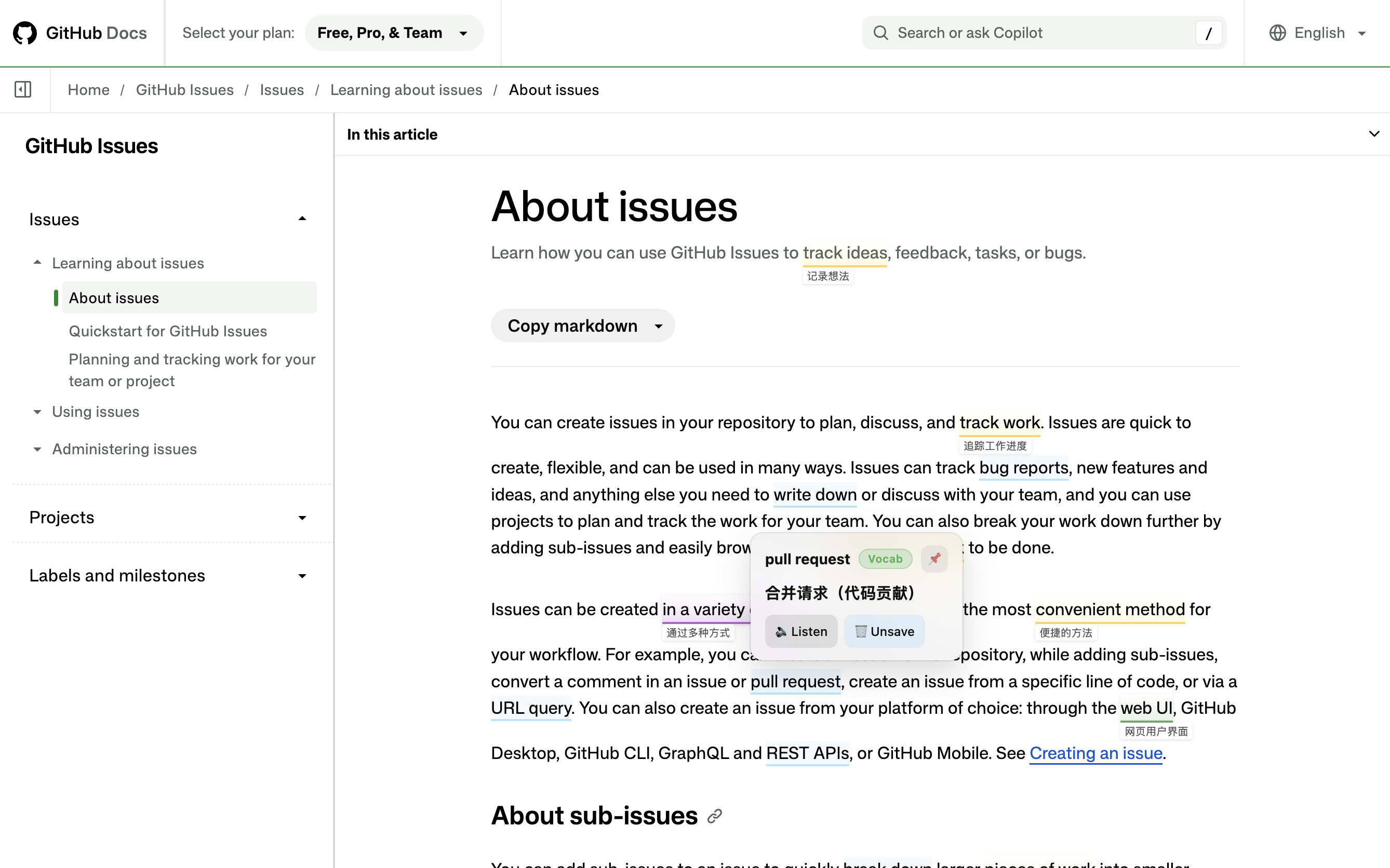
Save useful expressions while you read
After looking up catch up, you may run into another familiar-looking phrase on the next page. LeMingle finds and highlights expressions worth learning as you read, and helps you check the meaning in context. You can save useful ones; when they appear again on another page, they are flagged. Notice who is speaking and in what situation, so you keep more than a translation.
See a real screenshot of saving expressions