Break the ice: easing a first meeting
To break the ice is to help people who have just met, or who feel stiff with one another, relax and start talking. A friendly question or a shared activity can do it. It does not have to be a joke, and it is not about forcing someone to perform.

A situation that makes the meaning clearer
At a gathering for new students, few people know each other yet. Asking whether someone is also taking the same course gives them an easy opening. The aim is to make a first exchange feel possible, not to entertain the whole room.
Examples in context
The dialogues and examples below were written for teaching.
I asked about the course to break the ice.
I asked about the course to make the first conversation easier.
The host used a simple question to break the ice.
The host used a simple question to ease the awkward start.
Form and tone to remember
The past form is broke the ice. An icebreaker can mean an opening question or activity; in another context it can also mean a ship that breaks ice, so the setting matters.
The tone is informal and social. A good opening is easy to answer and usually comes from the shared situation, not from a memorized list of topics.
How can you reply?
Is this your first semester here too?
Are you new here this semester as well?
Start from something you both share, then listen. You do not need to fire off a string of questions.
Close expressions with different jobs
Small talk is light, informal conversation. Breaking the ice is the job of getting that conversation started when the first contact still feels stiff. People who already know each other also make small talk.
Save useful expressions while you read
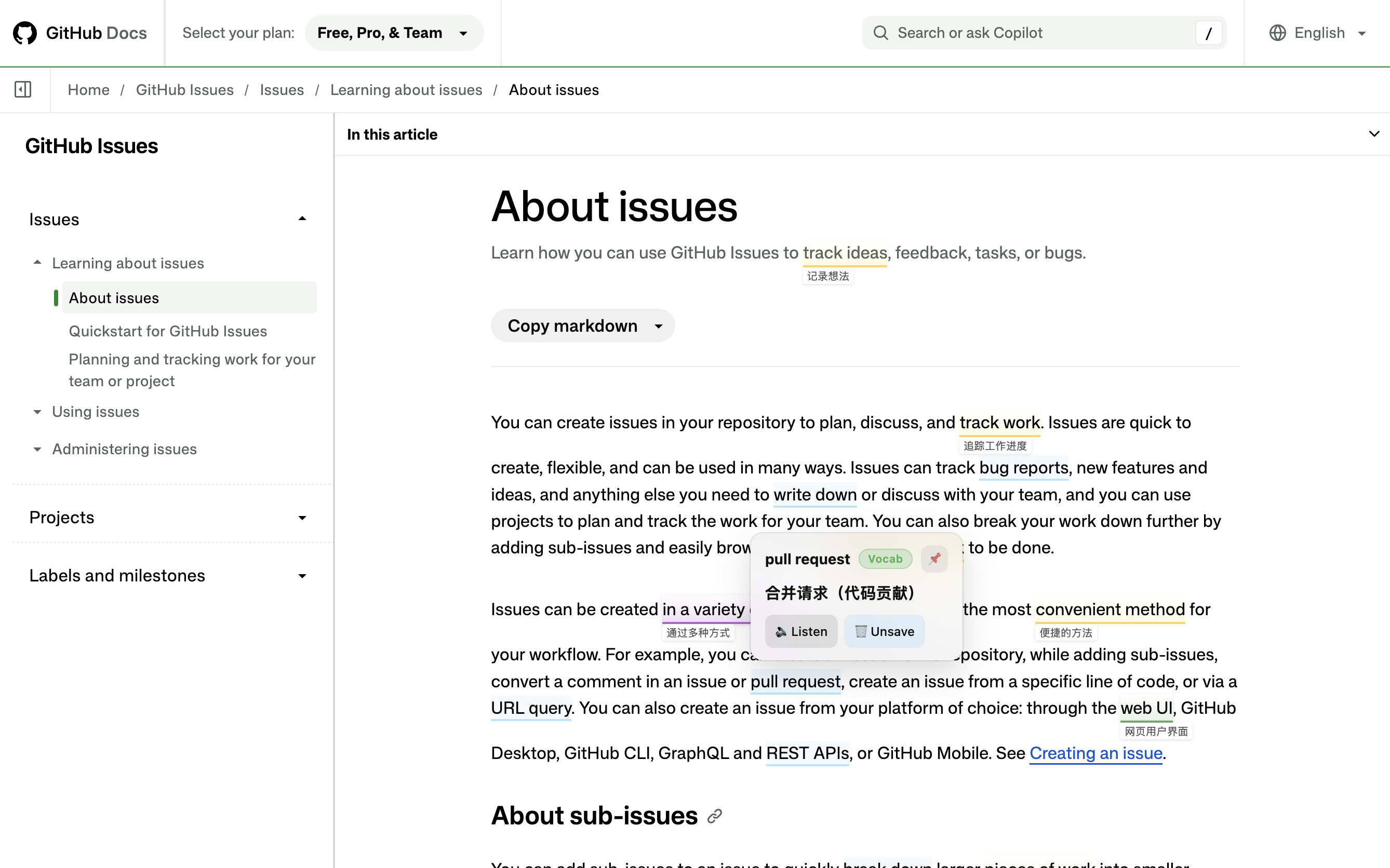
After looking up break the ice, you may run into another familiar-looking phrase on the next page. LeMingle finds and highlights expressions worth learning as you read, and helps you check the meaning in context. You can save useful ones; when they appear again on another page, they are flagged. Notice who is speaking and in what situation, so you keep more than a translation.
See a real screenshot of saving expressions