Low-hanging fruit: meaning and examples
Low-hanging fruit is an opportunity that is relatively easy to take, or a problem that is relatively easy to fix — like fruit on a low branch that you can pick without climbing. The phrase stresses ease. It does not guarantee that the result is the most valuable.

A situation that makes the meaning clearer
A website has a few broken links. Compared with rebuilding the whole system, fixing those links may be cheap and quickly visible. They can be low-hanging fruit, but you still have to ask whether they are worth doing.
Examples in context
The dialogues and examples below were written for teaching.
Fixing the broken links is low-hanging fruit.
Fixing the broken links is an easy, early win.
Let's tackle the low-hanging fruit before rebuilding the whole system.
Let’s deal with the easier problems first, before we rebuild the whole system.
Form and tone to remember
Fruit is usually a mass idea in this idiom; do not casually change it to fruits. Low-hanging modifies fruit. The hyphen is common when the words come before the noun they describe, and in the idiom itself.
The tone is informal workplace English. “Easy to do” is not the same as “most important.” If you only pick small tasks, you may keep avoiding the problem that actually affects users.
How can you reply?
Agreed. Which quick fixes would also help users most?
Agreed. Which quick fixes would also help users the most?
Look at effort and value together, not only at what can be done quickly.
Close expressions with different jobs
Move the needle asks whether a result has actually changed in a noticeable way. Low-hanging fruit asks whether an opportunity is relatively easy to take.
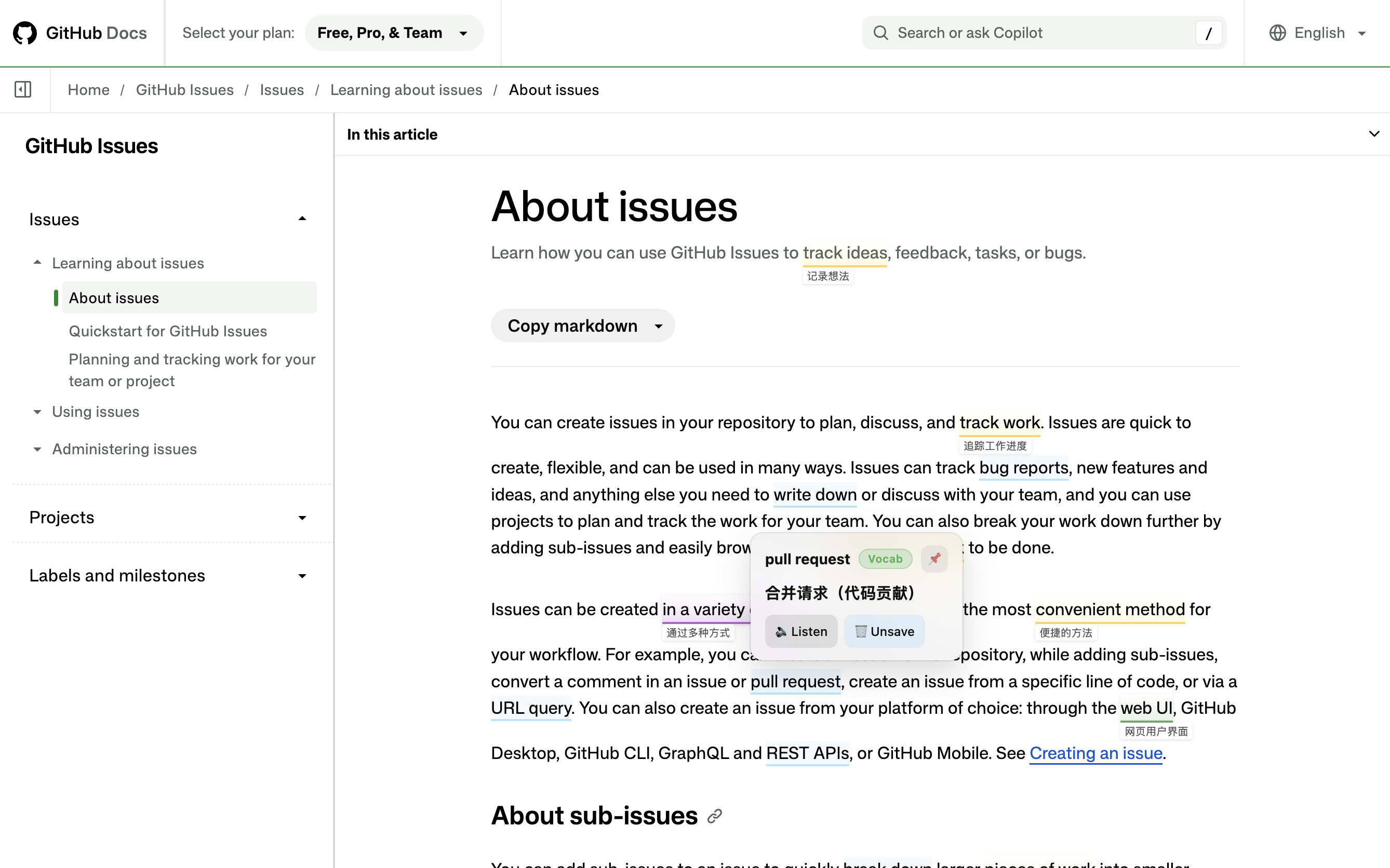
Save useful expressions while you read
After looking up low-hanging fruit, you may run into another familiar-looking phrase on the next page. LeMingle finds and highlights expressions worth learning as you read, and helps you check the meaning in context. You can save useful ones; when they appear again on another page, they are flagged. Notice who is speaking and in what situation, so you keep more than a translation.
See a real screenshot of saving expressions