No worries: meaning, tone, and how to reply
No worries is a relaxed way to say “it’s fine, don’t worry about it.” It often answers a small apology, and it can also work as “you’re welcome” after thanks. It is not a promise that nothing will go wrong.

A situation that makes the meaning clearer
A friend is a few minutes late and you genuinely do not mind. “No worries” reassures them. If something is serious, or still needs to be fixed, saying only this can sound as if you are brushing the problem aside.
Examples in context
The dialogues and examples below were written for teaching.
Sorry I'm a little late. — No worries. We've just started.
Someone is a little late; you say it is fine and that you have only just started.
Thanks for sending the notes. — No worries!
Someone thanks you for sending the notes, and you reply with a casual “you’re welcome.”
Form and tone to remember
The usual form is the plural worries. It often stands alone as a short reply; you do not have to spell out what someone should not worry about.
The tone is informal. In a formal or sensitive situation, “That’s all right,” “That’s okay,” or “You’re welcome” may fit better, and you can add what happens next. Do not treat it as a guarantee: “No worries, the launch will be fine” is easy to hear as “nothing will go wrong.” The phrase accepts a small inconvenience or thanks; it does not underwrite a risk.
How can you reply?
Thanks for understanding. I'll let you know earlier next time.
You thank them for being understanding and say you will give earlier notice next time.
Thank them and, if it helps, say what you will do differently. You do not need to keep apologizing.
Close expressions with different jobs
Close relatives in tone include no problem, sure, and don’t worry. Don’t worry more often tells someone not to feel anxious; no worries is usually a brief acceptance or a casual “you’re welcome.”
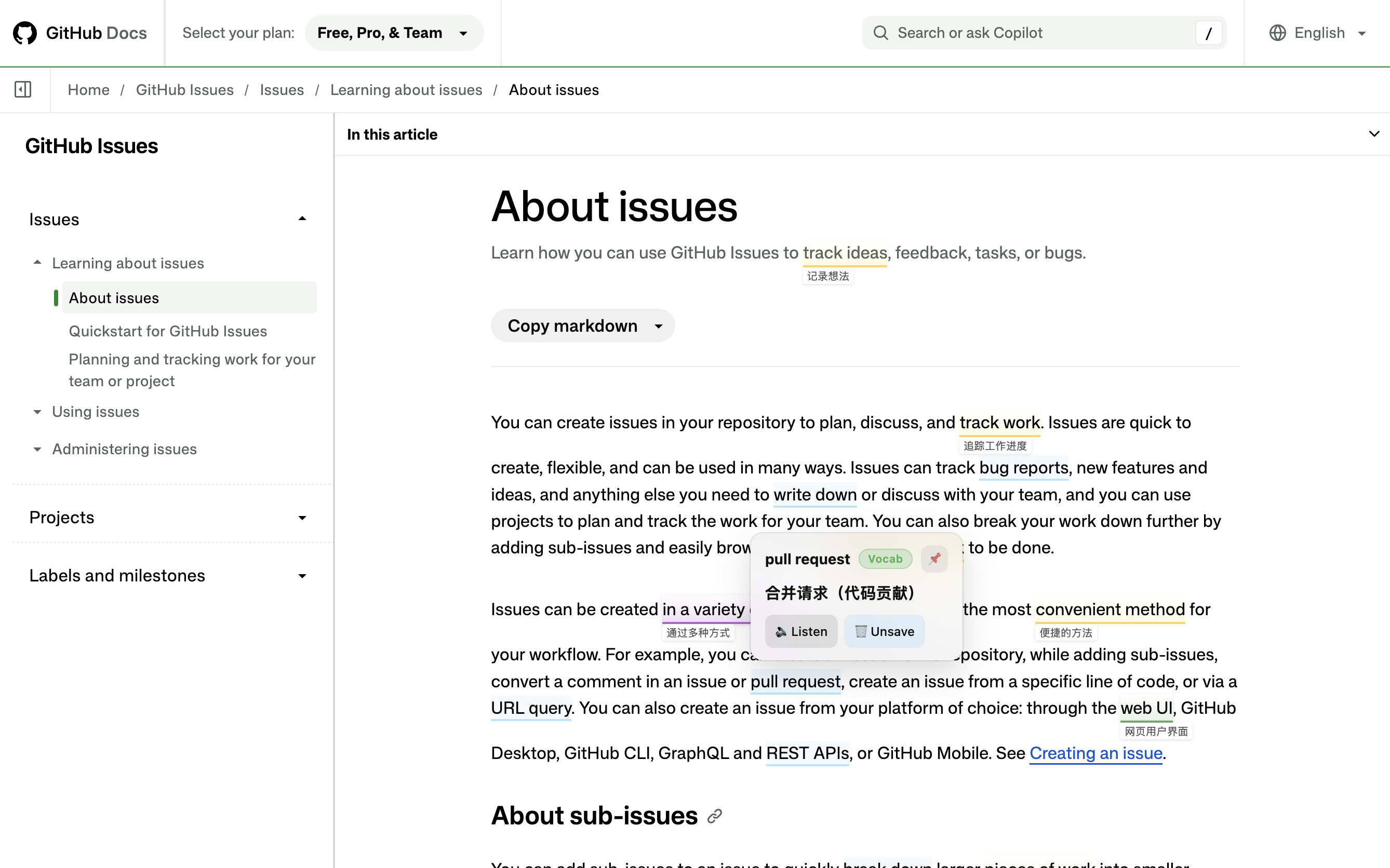
Save useful expressions while you read
After looking up no worries, you may run into another familiar-looking phrase on the next page. LeMingle finds and highlights expressions worth learning as you read, and helps you check the meaning in context. You can save useful ones; when they appear again on another page, they are flagged. Notice who is speaking and in what situation, so you keep more than a translation.
See a real screenshot of saving expressions