Read between the lines: meaning and examples
To read between the lines is to use the context to understand something that was not said directly — the implication of the words. An inference is not a fact; other readings may still be possible.

A situation that makes the meaning clearer
A colleague writes, “If it really has to be Friday, I’ll do my best.” You might infer that she is worried about the timing. You should not jump to “she doesn’t want to cooperate.” It is better to ask what her concern is.
Examples in context
The dialogues and examples below were written for teaching.
Reading between the lines, I think she's worried about the deadline.
From what she did not quite say, I think she is worried about the deadline.
You have to read between the lines of his reply.
You have to look at what his reply leaves implied, not only at the words on the page.
Form and tone to remember
Reading between the lines can introduce your own tentative reading. Read does not change spelling in the past tense; the pronunciation does.
Do not treat every vague reply as a refusal or as hostility. For an important decision, confirm directly. An inference is not a fact. The phrase is about what the wording and context suggest, not a license to treat a guess as certainty.
How can you reply?
Maybe. Let's ask what concerns her before we assume.
You keep the guess tentative and suggest asking what concerns her before assuming.
Keep the guess tentative, then suggest a checking question.
Close expressions with different jobs
Read the room is about the overall mood. Read between the lines is about what a particular wording leaves unsaid.
Save useful expressions while you read
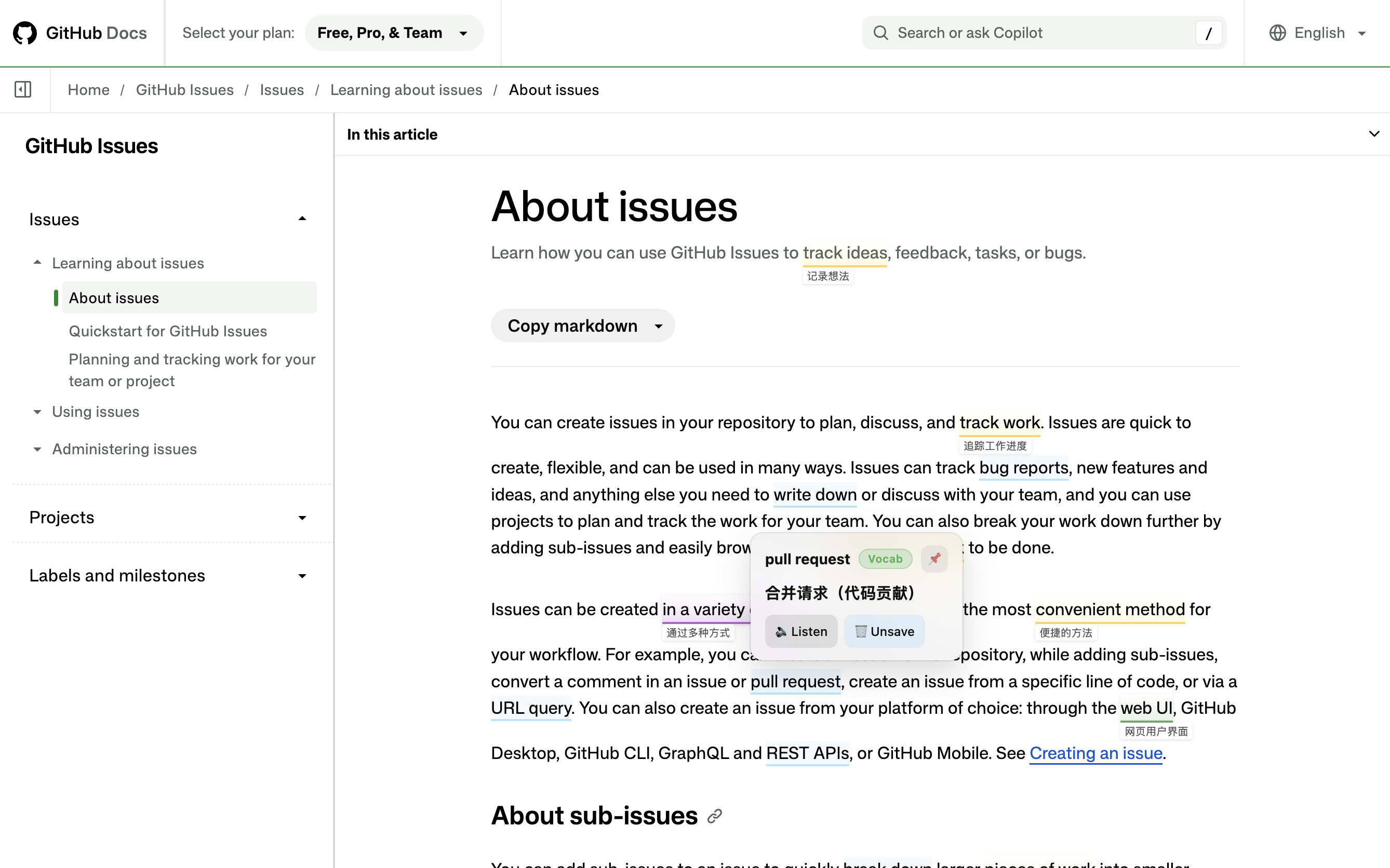
After looking up read between the lines, you may run into another familiar-looking phrase on the next page. LeMingle finds and highlights expressions worth learning as you read, and helps you check the meaning in context. You can save useful ones; when they appear again on another page, they are flagged. Notice who is speaking and in what situation, so you keep more than a translation.
See a real screenshot of saving expressions