Rule of thumb: meaning and how to use it
A rule of thumb is a simple, experience-based guideline for a quick estimate or decision. It is roughly useful, but it is not a precise formula, and it is not a rule without exceptions.

A situation that makes the meaning clearer
When you schedule meetings, you usually leave a little buffer. That is a reasonable starting point, but if someone has to walk between buildings, you still have to look at the actual distance.
Examples in context
The dialogues and examples below were written for teaching.
As a rule of thumb, leave some time between meetings.
As a practical guide, leave some time between meetings.
That's a useful rule of thumb, but this case needs a closer look.
That is a useful rough guide, but this case needs a closer look.
Form and tone to remember
As a rule of thumb introduces a general, experience-based guide. The plural is rules of thumb (the change is in rule).
When something must be exact, or must follow a formal requirement, an estimate is not a substitute for checking. A rule of thumb should always keep its conditions of use. It is not a hard rule and not a calculation. A rule can be an official requirement; a rule of thumb is approximate and practical.
How can you reply?
That works as a starting point. Let's check the actual requirements too.
You accept it as a starting point and suggest checking the actual requirements as well.
Acknowledge that the estimate is useful, and keep a verification step.
Close expressions with different jobs
A rule of thumb is a rough, experience-based guide. It is not a precise formula, and it is not a formal rule that must be followed in every case.
Save useful expressions while you read
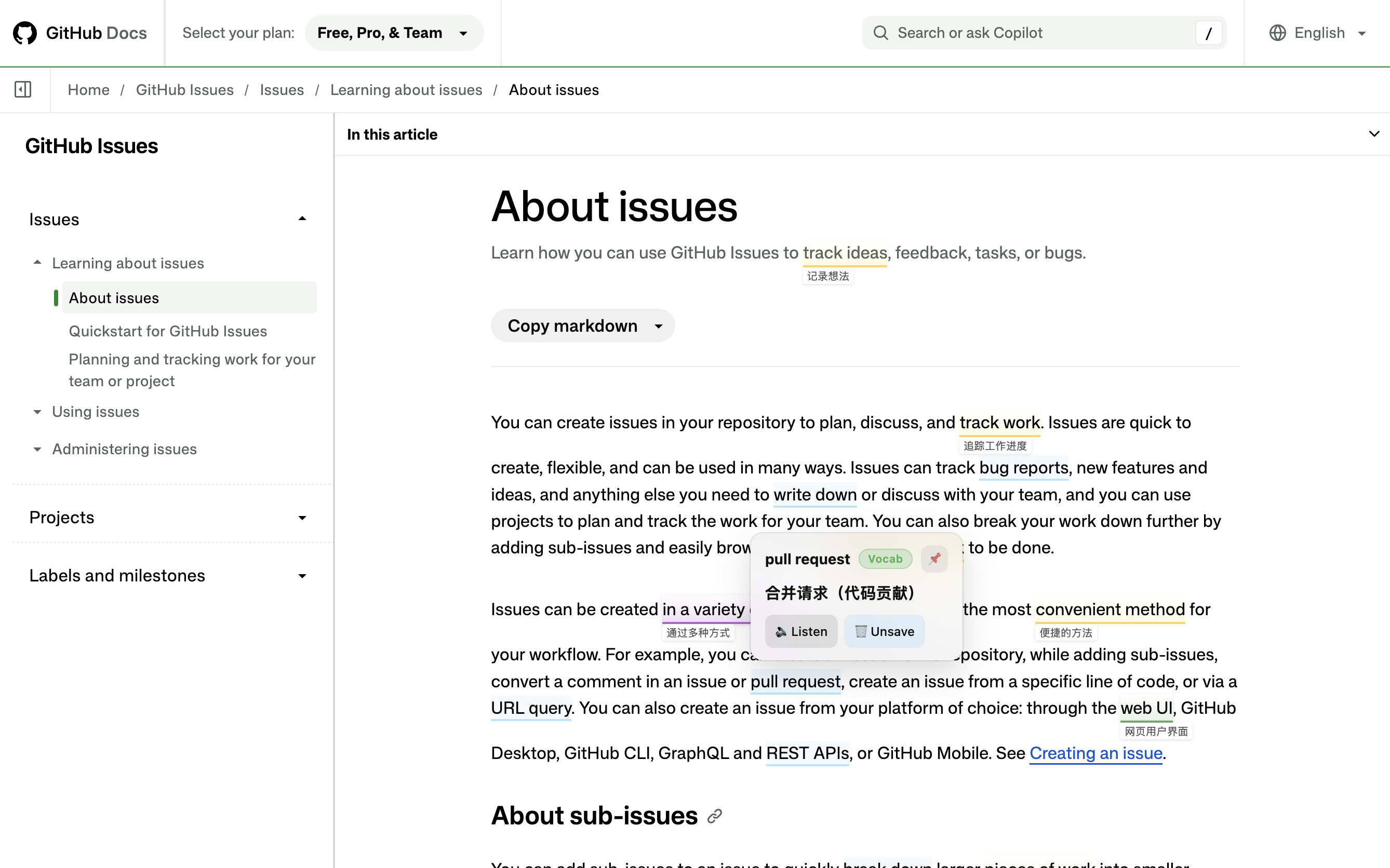
After looking up rule of thumb, you may run into another familiar-looking phrase on the next page. LeMingle finds and highlights expressions worth learning as you read, and helps you check the meaning in context. You can save useful ones; when they appear again on another page, they are flagged. Notice who is speaking and in what situation, so you keep more than a translation.
See a real screenshot of saving expressions