Have a lot on your plate: meaning and examples
To have a lot on your plate means you already have plenty of things to deal with — work, study, or other responsibilities. It is not about how much you eat. The tone is everyday, and people often use it to explain why they cannot take on more just now.

A situation that makes the meaning clearer
A thesis, classes, and a part-time job all fall in the same week. When someone asks you to join a new project, you can say you already have a lot on your plate, then talk about whether any room remains.
Examples in context
The dialogues and examples below were written for teaching.
I have a lot on my plate this week, so I can't join another project.
I already have a lot to deal with this week, so I can’t take on another project.
Do you have too much on your plate at the moment?
Do you currently have more to deal with than you can manage?
Form and tone to remember
The possessive changes with the person: I have a lot on my plate; she has a lot on her plate. Too much is stronger than a lot and suggests the load is already too high.
The tone is informal and human rather than official. The phrase does not list the tasks, and it does not automatically mean no. If you need a change, add what you are asking for, or when you could still help.
How can you reply?
A little. Could we discuss which task can wait?
Somewhat — could we talk about which task can wait?
Answer concern with one concrete adjustment.
Close expressions with different jobs
Wear many hats is about holding several roles. Have a lot on your plate can be a heavy load even inside a single role.
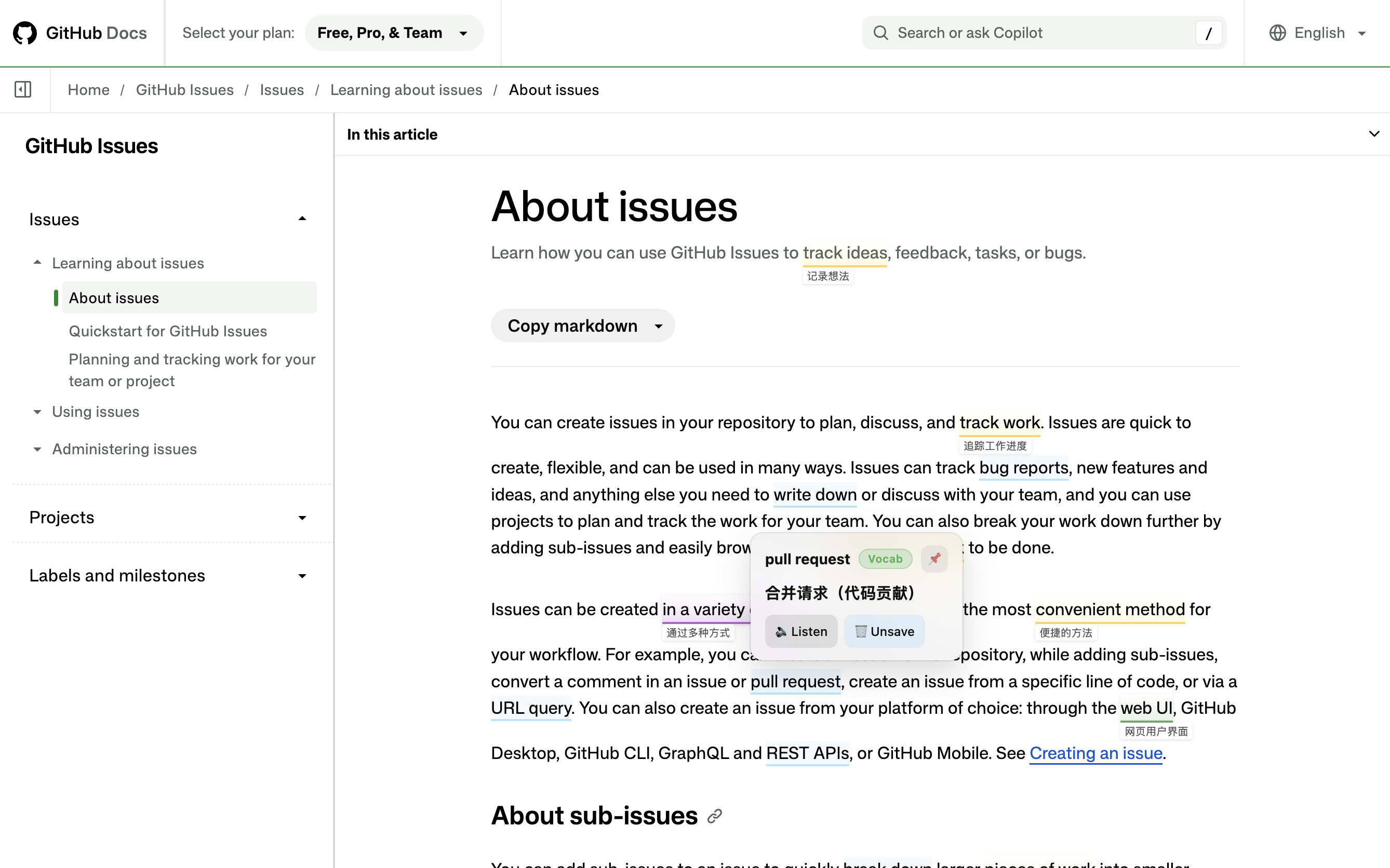
Save useful expressions while you read
After looking up have a lot on your plate, you may run into another familiar-looking phrase on the next page. LeMingle finds and highlights expressions worth learning as you read, and helps you check the meaning in context. You can save useful ones; when they appear again on another page, they are flagged. Notice who is speaking and in what situation, so you keep more than a translation.
See a real screenshot of saving expressions